
• About Community Research
    • Our People
    • Researcher Stories
    • Supporters
    • What Difference Does Community Research Make?
    • Membership
    • Kuhu mai
  • Resources
    • Code of Practice
    • Directory of Researchers
    • What Works
    • Awards and Seminars
      • Te Anga Mua Seminar 2012
      • New and Emerging Researchers Awards
    • List yourself in the Researchers Directory
    • Create a Collection
  • Research
    • Browse All Research
    • Share Research
    • Featured Collections
      • RBA™ Webinars and Resources
      • The Importance of New Zealand Non-Profits
      • Learning from Christchurch
      • Collective Impact for NGOs and iwi/Māori organisations.
      • ANZTSR Third Sector Research 2014
      • The Social and Economic Impact of Sports
    • RSS Feeds
  • Webinars
    • Past Webinars
      • Treaty Voyages – How’s Your Organisation Faring?
      • Co-design and Community Development: Kōrero and Insights from Māori Co-designers
      • Great data collection, and making sense of your data with RBA™
      • The Community Sector & Collection of Client Level Data
      • Organisational Outcomes and Meaningful Measures
      • RBA™ – The art of ‘Mapping & Gapping’, population, systems & services
      • Strengthening Whānau Aspirations
      • Ngā Hua a Tāne Rore: The Benefits of Kapa Haka
      • Outcomes Plus: Knowing and Showing the ‘added Value’ of  Community
      • Complex Projects, Short Stories
      • A Vision for Indigenous Evaluation
      • Counting What Matters: The size and significance of the New Zealand not-for-profit sector
      • How to amaze your funders with watertight evidence
      • Putting learning into practice webinar
      • Collective Impact: Getting to shared measurement webinar – 18 February 2014
    • New to YouTube live?
  • Whānau Ora Research
  • What Works
  • Contact Us

Community Research

The place to find good community research and researchers in New Zealand

Ko te hōkai nuku
Ko te hōkai rangi
Ko te hōkai a tō tupuna a Tānenuiarangi

Our Whakataukī Explained Here
  • Home
  • Share Research
  • Find Researcher
  • Browse Research
  • Facebook
  • YouTube
  • Twitter
You are here: Home / News / Sweeping changes for social services? – Comment from Trevor McGlinchey

Sweeping changes for social services? – Comment from Trevor McGlinchey

13 April 2015 By Admin Leave a Comment

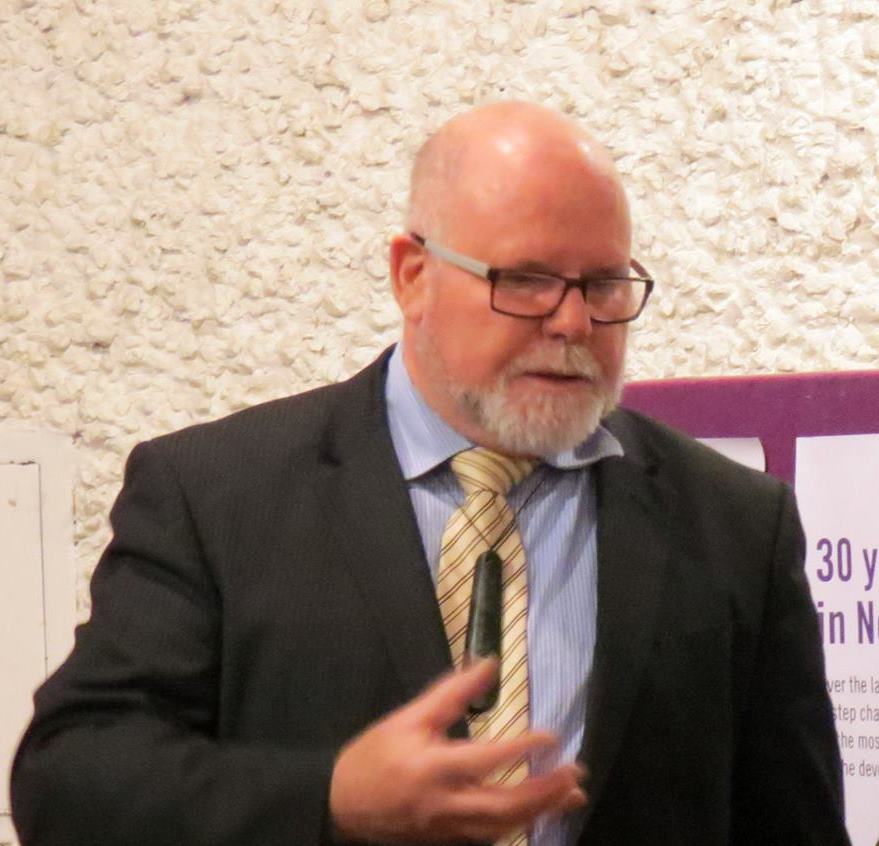
Trevor McGlinchey Profile PhotoTrevor McGlinchey of the New Zealand Council of Christian Social Services (NZCCSS) gives some stark warnings about recent trends in social service organisations, and gives the Heads-Up on forthcoming research on the topic, in his recent blog for Community Scoop.

Some government funded social services organisations report it’s been over ten years since they last received a cost of living allowance for the services they deliver.    The increase in inflation over that period is over 27% (http://www.rbnz.govt.nz/monetary_policy/inflation_calculator/).    So during a time of huge demand for services, especially since the Global Financial Crisis, and increasing demands for accountability, achievement of outcomes, and payment of increased costs like KiwiSaver, social service organisations have effectively decreased their spending power by over a quarter.   During this period as well there has been a dramatic increase of the complexity of the services required by whānau, families and communities.

In an environment where achieving a fiscal surplus is the driving ambition of the current government, the release of additional funds to social services providers would seem to be an unlikely event.   Given this, it is becoming increasingly more apparent government is working towards funding social services in different ways.  The Ministry of Social Development has restructured with Community Investment taking over the community funding arms of the organisation.   Community Investment is now overdue to release its funding allocation strategy, the decision making framework, which will inform the use of the $300 million they invest in community led social services.

During this period Child Youth and Family (CYF) have undertaken a workforce review and proposed a “modernisation” project.  Their proposals were for CYF social workers to focus exclusively on children who have been identified as reaching the statutory definition of being “in risk” of abuse and/or neglect.  With other highly complex “at risk” children and young people to be sent onto community based organisations.   However, this proposal was rejected by Cabinet who have established a reform group to more radically approach the restructure of Child, Youth and Family.  This reform group is led by Paula Rebstock, the person who chaired the welfare reform group whose recommendations dramatically changed New Zealand’s benefit structure.   There are no New Zealand experts on child and/or whānau centred social service practice on the reform group and certainly no representatives of social services organisations.

Add to this the establishment of Children’s Teams and we can see all of these new approaches signalling a huge level of change in the way government proposes to support vulnerable people within our communities.   The demands which will be placed on community based social services are both broad (across a whole range of areas) and deep (requiring changes in organisational thinking and operations).  Where there is no more funding and certainly no ‘fat’ in community organisations’ operations how can this additional, complex restructuring be achieved?  Government recognises and funds the cost of change within its own organisations.  Let us hope that they will also fund the cost of change for the community based organisations which are critical to delivering essential social services.

The Productivity Commission has delayed the release of its draft report on “More Effective Social Services” until April 2015 (it was to be released in March).  This report is focused on “… ways to improve how government agencies commission and purchase social services”.   It will provide important advice to inform government agencies purchasing policies, which in turn will have major effects on community organisations.   The introduction, a few years ago, of the Government Electronic Tendering System (GETS) has placed its own stresses and strains on community organisations and introduced some bizarre, inappropriate and competitive tendering processes into the system.   Let’s hope the Productivity Commission can produce a system that understands and values the existing relationships of organisations, the expertise and connectedness that exits within the community sector and how strong and capable community organisations contribute to strong and resilient communities.  Communities which support and foster whānau and family wellbeing and provide networks of positive interdependence.  In a time of such sweeping change it is important that any purchasing system recognizes the totality of an organisation’s contribution to wellbeing, not just a thin slice of its work focusing on how it may achieve a specified outcome.

The New Zealand Council of Christian Social Services has been researching how community organisations “add value” when government contracts them to provide social services.   Watch out for this research report in late April by visiting the NZCCSS website www.nzccss.org.nz .  We have already briefed the Productivity Commission on the findings of this research and will be doing the same with MSD and other government agencies soon.

Read the article

http://community.scoop.co.nz/2015/04/sweeping-changes-for-social-services-3/

Filed Under: News Tagged With: research, social services, Trevor McGlinchey, News

Leave a Reply Cancel reply

Your email address will not be published. Required fields are marked *

Follow us on Facebook

Sign-up for enews

First name:
Last name:
Email:
  • Who Are We:
  • About Community Research
  • Our People
  • Supporters
  • Researcher Stories
  • About Community Research
  • What We Do:
  • Kuhu mai
  • Special Collections
  • Events
  • How Can We Help:
  • Find a Researcher
  • List yourself in the Researchers Directory
  • Find Research:
  • Latest
  • RSS Feeds
  • News
  • Contribute:
  • Before You Upload
  • Supporters
  • Support Us
  • Create a Special Collection
  • About Community Research
    • Our People
    • Researcher Stories
    • Supporters
    • What Difference Does Community Research Make?
    • Membership
    • Kuhu mai
  • Resources
    • Code of Practice
    • Directory of Researchers
    • What Works
    • Awards and Seminars
      • Te Anga Mua Seminar 2012
      • New and Emerging Researchers Awards
    • List yourself in the Researchers Directory
    • Create a Collection
  • Research
    • Browse All Research
    • Share Research
    • Featured Collections
      • RBA™ Webinars and Resources
      • The Importance of New Zealand Non-Profits
      • Learning from Christchurch
      • Collective Impact for NGOs and iwi/Māori organisations.
      • ANZTSR Third Sector Research 2014
      • The Social and Economic Impact of Sports
    • RSS Feeds
  • Webinars
    • Past Webinars
      • Treaty Voyages – How’s Your Organisation Faring?
      • Co-design and Community Development: Kōrero and Insights from Māori Co-designers
      • Great data collection, and making sense of your data with RBA™
      • The Community Sector & Collection of Client Level Data
      • Organisational Outcomes and Meaningful Measures
      • RBA™ – The art of ‘Mapping & Gapping’, population, systems & services
      • Strengthening Whānau Aspirations
      • Ngā Hua a Tāne Rore: The Benefits of Kapa Haka
      • Outcomes Plus: Knowing and Showing the ‘added Value’ of  Community
      • Complex Projects, Short Stories
      • A Vision for Indigenous Evaluation
      • Counting What Matters: The size and significance of the New Zealand not-for-profit sector
      • How to amaze your funders with watertight evidence
      • Putting learning into practice webinar
      • Collective Impact: Getting to shared measurement webinar – 18 February 2014
    • New to YouTube live?
  • Whānau Ora Research
  • What Works
  • Contact Us