
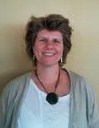
Bonnie-May Shantz, Community Development Manager from Community Waitakere Charitable Trust talks about how people at Community Waitakere took a step back from their everyday practice, to determine how they wanted to evaluate and record the ways that they make a difference in their community. This remarkable project examines evaluation frameworks in other community development organisations and includes case studies, measures and methodologies for evaluating social impact, and indicators of success. And now, the fine people of Community Waitakere want to share what they’ve learned.
“I want to make sure that we have a quality piece of research that is not only going to be useful for us but also will be useful for others in the Sector.”
How did you get to where you are? (Brief career journey)
My professional career has been in academic institutions, local government and non-profit organisations. After completing my masters in geography on public space, I began to have a greater focus on research in my community development work. I was a contract researcher for a short while and then joined the community development team at Auckland City Council where we worked to make sure we had a strong evidence base in our planning.
Now I am using those experiences here at Community Waitakere to guide our research project, so we can enhance and refine our practice through having good information to direct our planning and actions.
What’s on your mind at the moment?
I want to make sure that we have a quality piece of research that is not only going to be useful for us but also will be useful for others in the Sector. That’s been our hope.
We have three stages to our research. The first stage is one of those that’s for everyone. This includes a referenced list of social wellbeing measures, a literature review around community development evaluation methodologies and frameworks and some case studies. With this stage we wanted to see what evaluation others had done and learn a bit about what was successful or not so successful.
The second stage is more self-centred, it is a retrospect analysis of Community Waitakere’s work over the last ten years. This is essentially about us looking backwards to be able to move forwards. We wanted to review what we did, why we did it, what the outcomes were and what we learned.
The third stage is locally focussed. This is for both ourselves and for anyone working in community development in Waitakere. This stage involves investigating the aspirations and needs of this community, what people want to pursue, what opportunities they see and what sorts of roles, functions and support is required to meet these aspirations.
Hopefully this research will provide pathways and a direction forward, both for ourselves and others. When it’s all done we will make it available to everyone through our website. We hope people will be able to use this research as evidence in developing their own work and certainly we will be considering how to implement these research findings into our planning process.
Tell me about a challenge you’ve been grappling with
In stage four of our research our emphasis is to reach out to “hard to reach groups”; those who are not in formalized groups or who we aren’t necessarily networked with. We specifically put it in the project plan to challenge ourselves, because it is so important.
What we have been doing to mitigate the challenge is going out to the people. Our researcher is arranging to meet with people in their places and using a snowballing technique to try to reach out to a diverse group of people who simply do not attend the standard meetings.
We know that’s not just our challenge, that’s a challenge for everyone.
Tell us about one factor that made this successful?
We would like to thank the Lotteries Research Grant for providing the funding that allows us to do this work. Many organisations are not so lucky. In the community sector, we are not often paid to do research. This lack of financial support prevents us from cultivating a culture of investigating best practice or even just evaluating ourselves – what we’ve done and whether or not we’ve done it well.So this grant is a really excellent one. I encourage others to look into it and frankly we need more of it. We need more funders to support community research and evaluation, which really will enhance all of our work.
Why does this piece of research excite you?
The aspirations analysis of community development work in Waitakere is really exciting and it will provide an excellent platform for us and others in our sector to work from.
Because we haven’t had a Census since 2006, we know that things have changed, we have anecdotal evidence to suggest this, but once we have people telling their own stories about what they aspire to, what they need, we can get a better sense of direction.
To find out more about the Evaluation for more effective Community Development project 2012/13 click here
Download Community Waitakere’s papers from the Evaluation Project here:Cast Studies – Evaluation Frameworks in Community Development Organisations, Community Development Evaluation Measures: Indicators of Success and Literature Review of Evaluation Methods & Methodologies
For more about the Lottery Community Research Grants click here